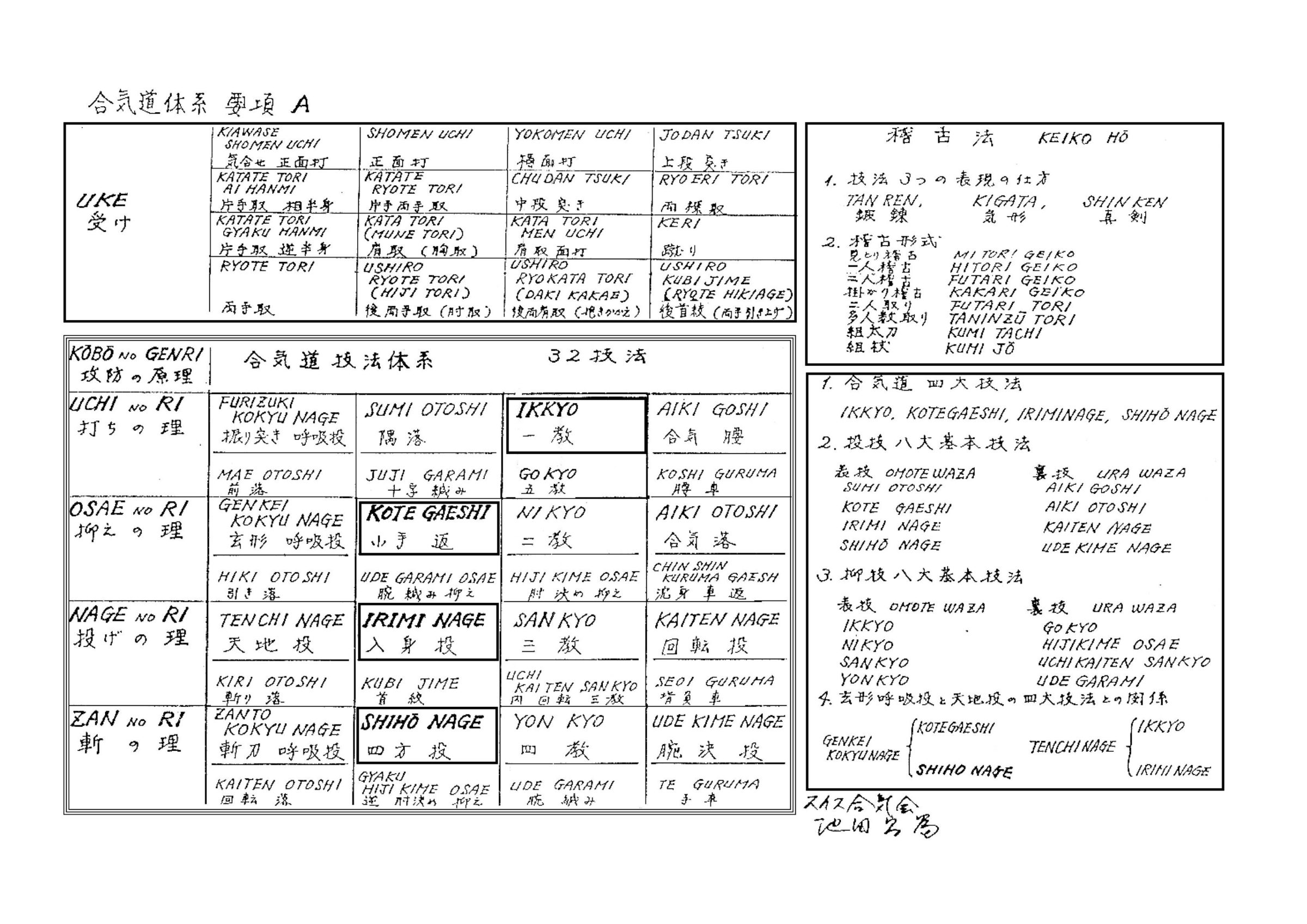
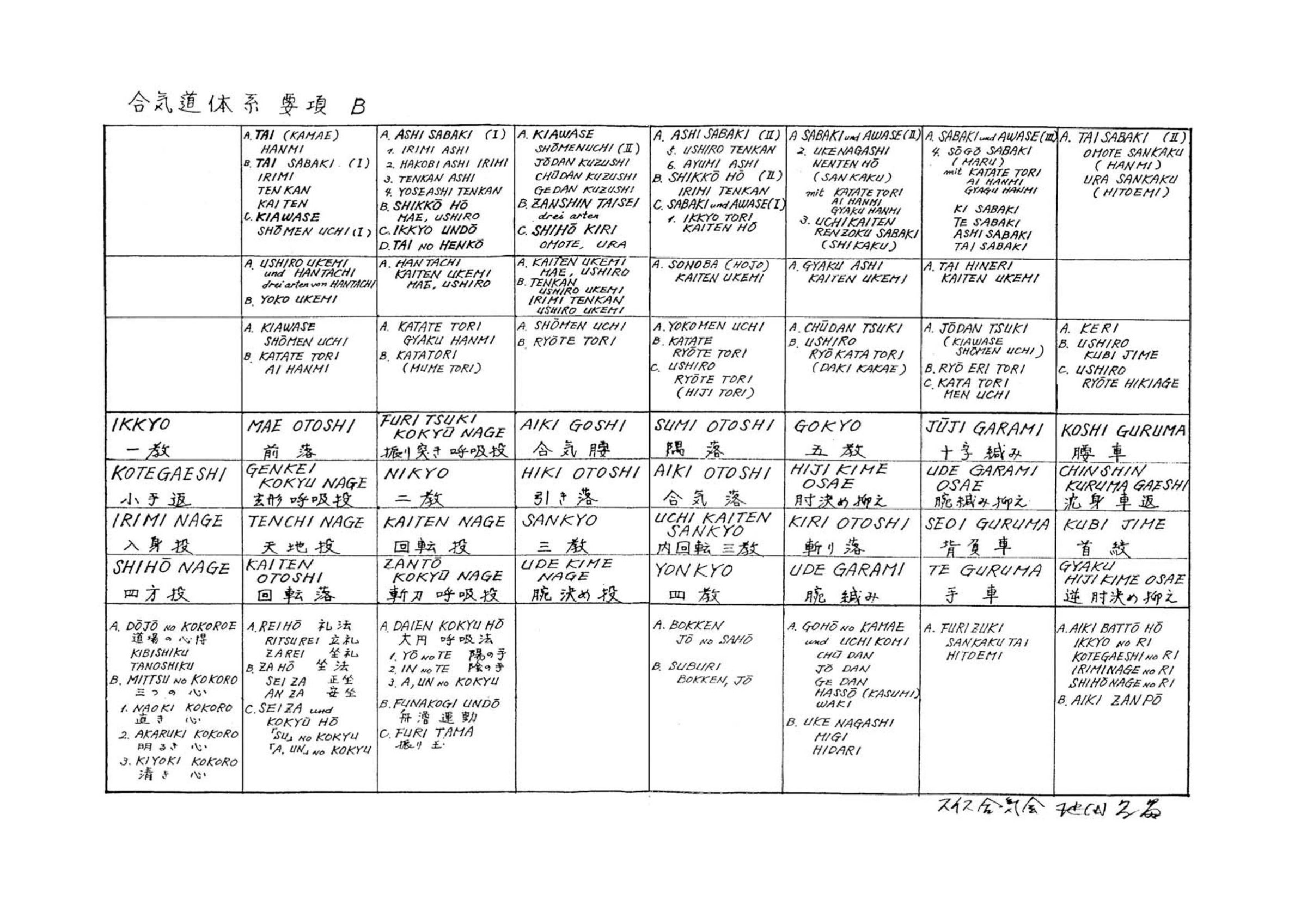
Ikeda Masatomi sensei summed up the whole of aikido in two charts. Chart A says what: the attacks, the four principles and the 32 techniques that grow out of them, and the way of training. Chart B says in what order: a core and seven stages in which movement, falls, attacks, techniques and the spirit of the dojo are learned together.
Who Ikeda Masatomi sensei was
Ikeda Masatomi池田昌富 (1940–2021), 7th Dan Aikikai, Shihan, was a Japanese aikido teacher and, from 1977, technical director of the Swiss association. From 1995 to 2002 he was technical director of the Slovak Aikido Association (SAA), and its honorary technical director from 2002. The charts are signed スイス合気会 池田昌富 – Swiss Aikikai, Ikeda Masatomi.
His “system of aikido techniques” (合気道技法体系) orders the techniques by the principle they rest on, not by the attack. The 1999 exam syllabus of the Slovak Aikido Association, which we use for gradings in Vráble, is built on it as well.
The title 要項yōkō means “main points”. The charts are handwritten in Japanese, with romaji and a few notes in German. In Slovakia they are known as Ikeda’s charts.
How to read this: what is on the charts is transcribed faithfully. The technique descriptions and connections are our explanation for students. The exact form of each technique is shown by the teacher on the mat.
Chart A – what is practised
Chart B – in what order
Map of the system
The partner’s attack (uke) is the entry point. The four principles decide how tori responds. The 32 techniques grow out of them. Around this stand the way of training (keiko hō) and the teaching path of chart B.
32 techniques – Aikidō gihō taikei 合気道技法体系
The rows are the four principles; each cell holds the upper and lower technique of chart A. Click a technique for details. Use the filters to highlight groups, the colour to show the order of chart B, and the slider to walk the teaching path stage by stage.
Breath throws and drops. Top row: four breath throws (including tenchi nage). Bottom row: four “otoshi” – drops.
Basic omote throws · entanglements. Chart A calls the top row explicitly “8 basic throws – omote”. Bottom row: entanglements and locks.
Controls omote · ura. Top row: ikkyo – yonkyo (omote). Bottom row: their ura pairs. Chart A lists both as the “8 basic controls”.
Ura throws · wheels. Chart A calls the top row “8 basic throws – ura”. Bottom row: “guruma” – wheel-like throws.
Columns: the right-hand panel of chart A confirms that the second and fourth columns are the basic omote and ura throws and the third column the controls. The names of the first column and the lower rows are our reading of what the techniques have in common.
The four principles – Kōbō no genri 攻防の原理
“Principles of attack and defence.” The character 理ri means a law: not a particular movement but the reason a technique works. Each principle has eight techniques, with one of the great four as its model.
打
Principle of striking Uchi no ri 打ちの理
Meeting the attack at its moment. Tori does not dodge but enters the line, blends with the strike and at once leads its force down or to the side.
The typical arm movement is that of shōmen uchi: raise, meet, cut down. Ikkyo is its purest form. The techniques in this row rely on timing and a direct entry, not on leverage.
抑
Principle of control Osae no ri 抑えの理
Take over the partner's force through the joints and bring them calmly to the ground. Control, not destruction.
What matters is leading the wrist and elbow so that uke loses their support and stays under control. Kote gaeshi is the model: turning the wrist changes the attack into a fall, followed by a pin.
投
Principle of throwing Nage no ri 投げの理
The force of the attack flows around tori's centre and turns into a throw. Entering (irimi) and turning (tenkan) form a circle through which uke flies.
Tori takes a place behind or beside uke where the attack cannot reach, and joins uke's movement. Irimi nage is the core: entering behind the partner and throwing in one continuous movement.
斬
Principle of cutting Zan no ri 斬の理
The arm and body move like a sword cut. Uke's arm is led as if tori were cutting in four directions.
In aikido the empty-hand movements come from the sword. Shihō nage shows it: uke's arm passes over tori's head like a sword being raised, and a cut downward finishes the throw.
The Slovak Aikido Association links the principles to elements: strike – water, control – earth, throw – wind, cut – fire. These elements are not on Ikeda’s charts; they are an SAA teaching aid. The colours on this page follow them.
Attacks – Uke 受け
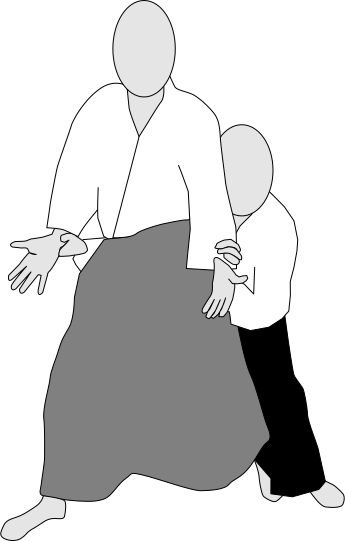
Chart A opens with sixteen attacks. The word uke here means the attack that tori “receives”. The order on the chart runs from blending (kiawase) through grabs to attacks from behind. Each shows the stage of chart B in which it is first practised.
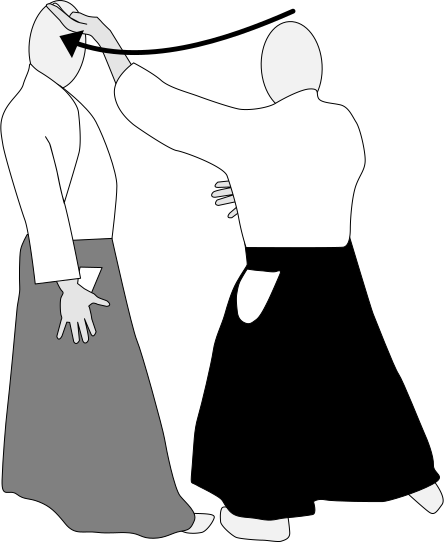
strikes · stage 1Kiawase shōmen uchi気合せ正面打blending in a strike from above
Both raise an arm for a strike from above at the same moment and meet forearm to forearm.
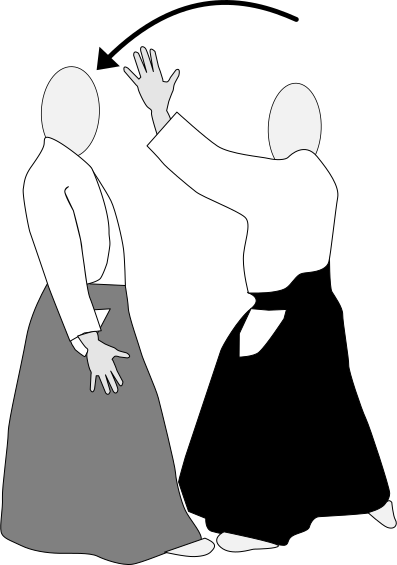
strikes · stage 3Shōmen uchi正面打strike from above to the forehead
The edge of the hand cuts vertically at the forehead, like a sword.
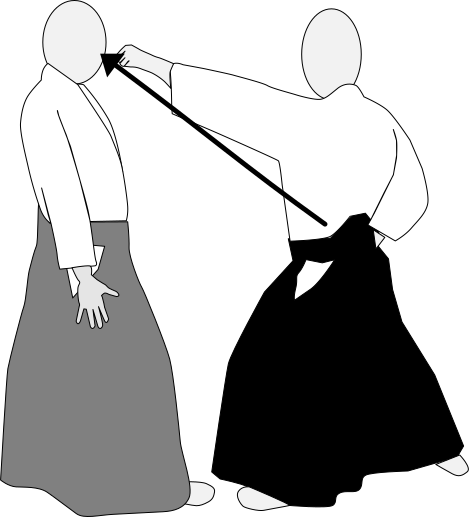
strikes · stage 4Yokomen uchi横面打strike to the temple
A diagonal strike with the edge of the hand to the side of the head.
thrusts · stage 6Jōdan tsuki上段突きthrust to the head
A straight punch to the face.
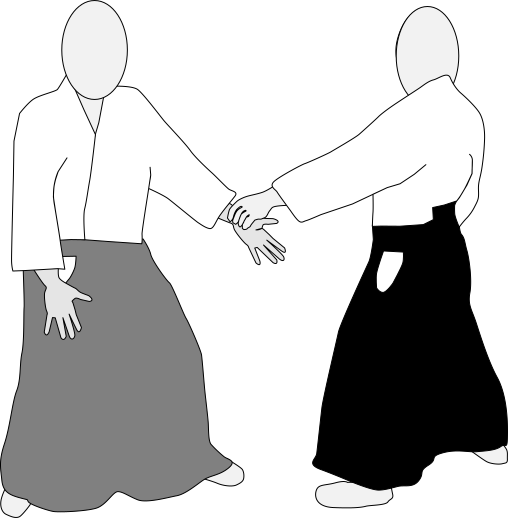
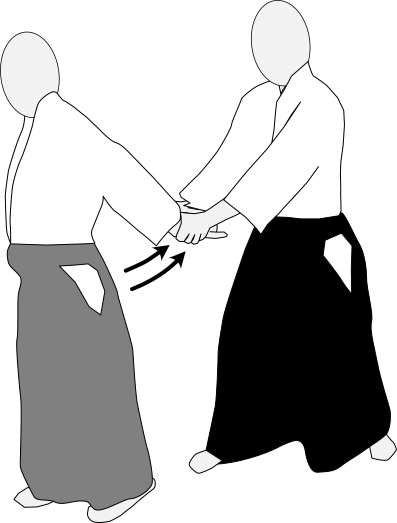
grabs from the front · stage 1Katate tori ai hanmi片手取 相半身wrist grab, same stance
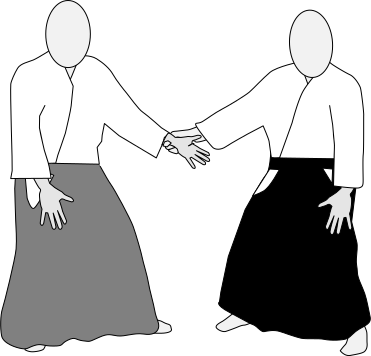
Uke grabs tori's right wrist with the right hand (crosswise).
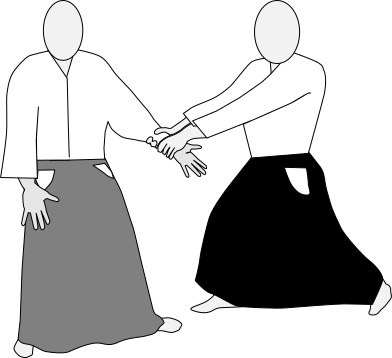
grabs from the front · stage 4Katate ryōte tori片手両手取one arm held with both hands
Uke grabs one of tori's forearms with both hands.
thrusts · stage 5Chūdan tsuki中段突きthrust to the stomach
A straight punch to the middle of the body.
grabs from the front · stage 6Ryō eri tori両襟取grab of both lapels
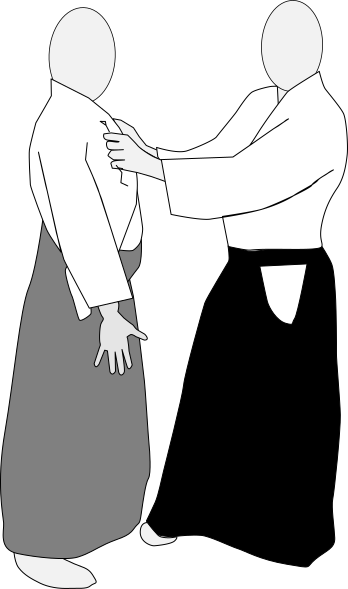
Uke grabs both lapels of tori's keikogi.
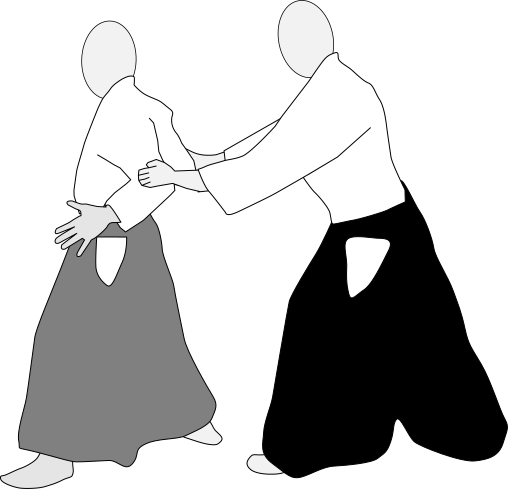
grabs from the front · stage 2Katate tori gyaku hanmi片手取 逆半身wrist grab, opposite stance
Uke grabs tori's right wrist with the left hand (straight across).
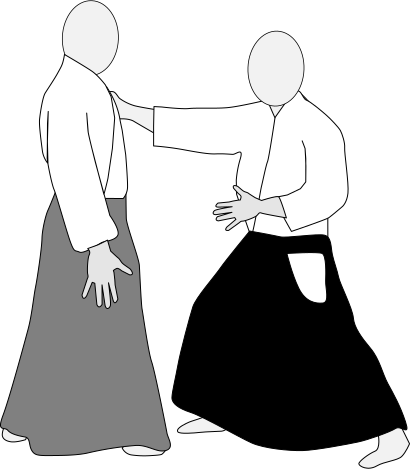
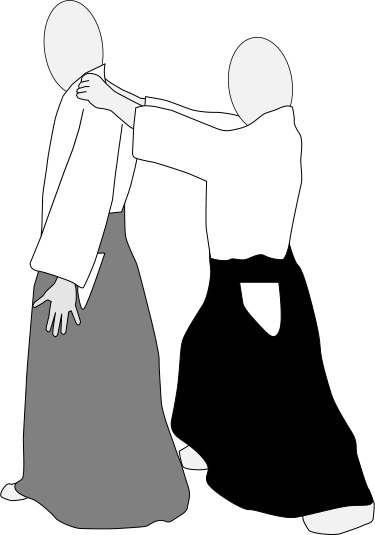
grabs from the front · stage 2Kata tori (mune tori)肩取(胸取)shoulder (chest) grab
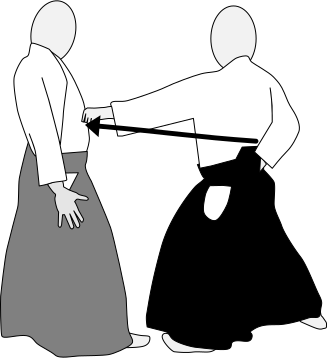
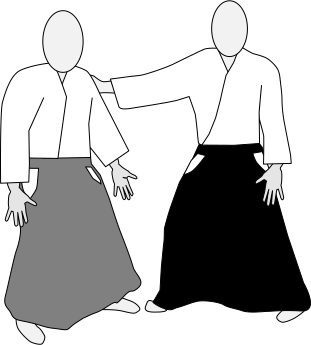
Uke grabs the keikogi at the shoulder, or at the chest.
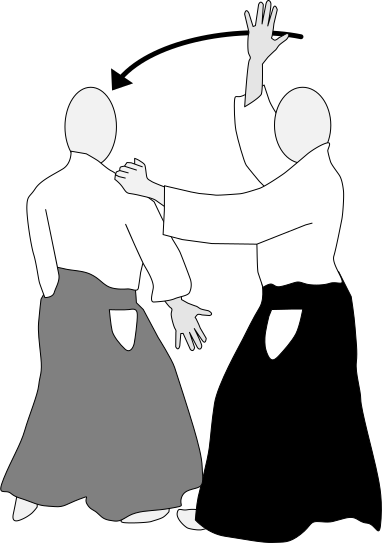
grabs from the front · stage 6Kata tori men uchi肩取面打shoulder grab and strike
Uke grabs the shoulder and strikes from above with the other hand.
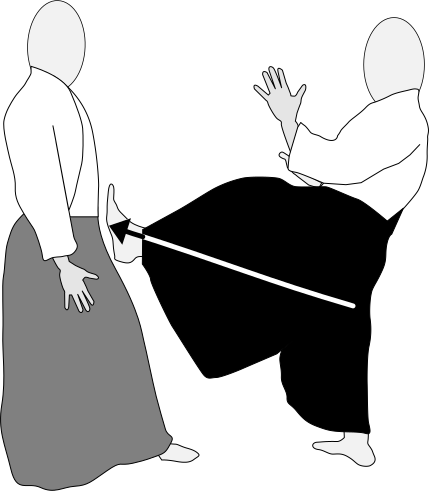
kick · stage 7Keri蹴りkick
A kick, for example mae geri forward.
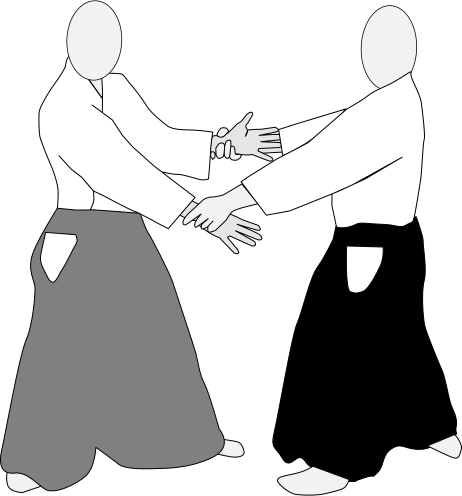
grabs from the front · stage 3Ryōte tori両手取grab of both wrists
Uke grabs both of tori's wrists from the front.
grabs from behind · stage 4Ushiro ryōte tori (hiji tori)後両手取(肘取)both wrists (elbows) from behind
Uke goes around tori and grabs both wrists or elbows from behind.
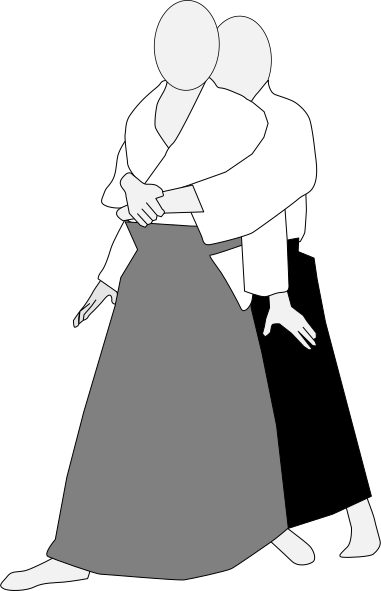
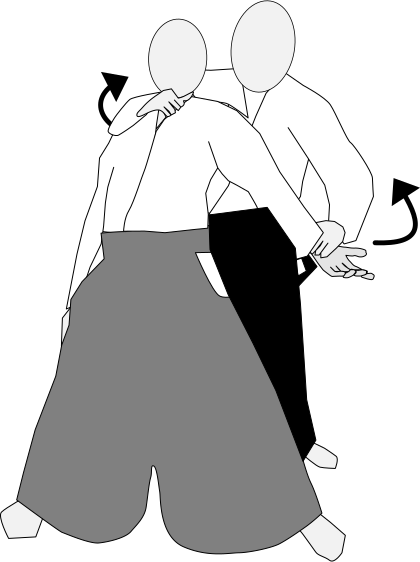
grabs from behind · stage 5Ushiro ryōkata tori (daki kakae)後両肩取(抱きかかえ)both shoulders from behind (bear hug)
Uke grabs both shoulders from behind, or hugs tori.
grabs from behind · stage 7Ushiro kubi jime (ryōte hikiage)後首絞(両手引き上げ)choke from behind (arms lifted)
Uke chokes from behind with one arm and holds a wrist with the other; or lifts both of tori's arms.
Core: 4 great techniques, 8 throws, 8 controls
The lower right panel of chart A picks the most important of the 32 techniques.
合気道四大技法 The four great techniques of aikido
Each stands in one principle: ikkyo in striking, kote gaeshi in control, irimi nage in throwing, shihō nage in cutting. Whoever understands them will more easily grasp the other techniques in the same row.
投技八大基本技法 Eight basic throws
Omote 表技
Ura 裏技
抑技八大基本技法 Eight basic controls
Omote 表技
Ura 裏技
Omote and ura here do not only mean “in front of the partner” and “behind the partner”. On the chart every omote technique has its ura pair in the same principle: sumi otoshi – aiki goshi, kote gaeshi – aiki otoshi, irimi nage – kaiten nage, shihō nage – ude kime nage; ikkyo – gokyo, nikyo – hiji kime osae, sankyo – uchi kaiten sankyo, yonkyo – ude garami.
Techniques: genkei kokyū nage and tenchi nage
The last row of chart A (玄形呼吸投と天地投の四大技法との関係) shows where the four great techniques come from. Two breath throws are their seed.
The circular arm movement and wrist turn contained in genkei become a wrist lock in kote gaeshi, and in shihō nage the raising of the arm over the head and the cut.
The upper hand of tenchi nage cuts down as in ikkyo; the entry past the partner and the hand that leads them backwards are the basis of irimi nage.
For gradings: the 6th kyu exam of the SAA syllabus contains exactly these six techniques – irimi nage, kote gaeshi, ikkyo, shihō nage, tenchi nage and genkei kokyū nage. The first exam therefore teaches the core of Ikeda’s system.
How to train – Keiko hō 稽古法
Three ways to express a technique 技法3つの表現の仕方
The same technique can be practised in three ways. The chart gives only the names; the description is our explanation.
鍛錬
Tanren
forging
A firm, precise form. Uke holds fully, tori looks for the right body structure and power from the hips and legs. This is how both body and technique are “forged”.
気形
Kigata
ki form
A flowing form: tori and uke are joined in movement from the first contact, the technique flows without stopping (ki no nagare).
真剣
Shinken
live blade
In earnest, as if it were a real sword: full concentration, exact timing and distance, no needless movement.
Forms of training 稽古形式
Mitori geiko見取り稽古learning by watchingWatch the teacher and the others closely; even sitting at the edge of the mat is training.
Hitori geiko一人稽古solo practiceMovements without a partner: sabaki, ukemi, suburi with sword and staff.
Futari geiko二人稽古practice in pairsThe basic form of training: tori and uke take turns.
Kakari geiko掛かり稽古continuous attacksUke attack one after another; tori has no time to stop.
Futari tori二人取りagainst twoTori works against two attackers at once.
Taninzū tori多人数取りagainst manyTori against a group of attackers (randori).
Kumi tachi組太刀paired sword practicePairs with bokken: attack and response in a fixed order.
Kumi jō組杖paired staff practicePairs with jō.
The teaching path – chart B
Chart B has eight columns. The first is the core, the other seven are stages. Each column holds movement and basics, ukemi, attacks, four techniques (one from each principle, in the order strike, control, throw, cut) and spirit, breath and weapons. Everything is learned side by side, not falls first and techniques later.
Techniques by stage of chart B; the rows are the principles
打 Uchi no ri
抑 Osae no ri
投 Nage no ri
斬 Zan no ri
The rows match the rows of the 32 techniques in chart A. Each stage adds one technique to every principle, so after seven stages all of them are covered.
Core
the four great techniques and the spirit of the dojo
Techniques – one from each principle
Spirit, breath, weapons
Dōjō no kokoroe道場の心得 – dojo principles: kibishiku, tanoshiku – strictly and with joy
Mittsu no kokoro三つの心 – three hearts: naoki kokoro 直き心 (direct, sincere), akaruki kokoro 明るき心 (bright, joyful), kiyoki kokoro 清き心 (pure)
Stage 1
stance, three body movements, first meeting
Movement and basics
Tai (kamae) – hanmi – stance: half body, at an angle to the partner
Tai sabaki I – irimi, tenkan, kaiten – three body movements: entering, turning around the front foot, turning on the spot
Kiawase shōmen uchi I – blending in a strike from above
Ukemi
Ushiro ukemi and hantachi – back fall; three ways from a half-kneeling position
Zahō坐法 – ways of sitting: seiza 正坐 (formal sitting on the heels), anza 安坐 (relaxed sitting)
Seiza and kokyū hō正坐・呼吸法 – breathing exercises in seiza: the “su” breath and the “a-un” breath
Stage 2
footwork, knee walking, changing the body
Movement and basics
Ashi sabaki I – footwork: 1. irimi ashi, 2. hakobi ashi irimi, 3. tenkan ashi, 4. yoseashi tenkan
Shikkō hō – walking on the knees forward and back (mae, ushiro)
Ikkyo undō – the ikkyo movement exercise
Tai no henkō – changing the body – a turn from a wrist grab
Ukemi
Hantachi kaiten ukemi – roll from half-kneeling, forward and back
Attacks
Katate tori gyaku hanmi
Kata tori (mune tori)
Techniques – one from each principle
Spirit, breath, weapons
Daien kokyū hō大円呼吸法 – great-circle breathing: yō no te 陽の手 (yang hand), in no te 陰の手 (yin hand), a-un breath
Funakogi undō舟漕運動 – rowing – the torifune exercise
Furitama振り魂 – shaking the joined hands in front of the lower belly, to calm and centre
Stage 3
unbalancing, zanshin, cutting in four directions
Movement and basics
Kiawase shōmen uchi II – jōdan, chūdan and gedan kuzushi – unbalancing high, middle, low
Zanshin taisei – stance of awareness after the technique, three kinds
Shihō kiri omote, ura – cutting in four directions, preparation for shihō nage
Ukemi
Kaiten ukemi – roll forward and back
Tenkan ushiro ukemi – back fall from a turn
Irimi tenkan ushiro ukemi – back fall from an entry and turn
Attacks
Shōmen uchi
Ryōte tori
Techniques – one from each principle
Stage 4
walking, first sabaki and awase, weapons
Movement and basics
Ashi sabaki II – 5. ushiro tenkan, 6. ayumi ashi (ordinary walking)
Shikkō hō II – irimi tenkan on the knees
Sabaki and awase I – 1. ikkyo tori kaiten hō – a turn from a grab
Ukemi
Sonoba (hojo) kaiten ukemi – roll on the spot, an auxiliary exercise
Attacks
Yokomen uchi
Katate ryōte tori
Ushiro ryōte tori (hiji tori)
Techniques – one from each principle
Spirit, breath, weapons
Bokken, jō no sahō作法 – etiquette with weapons
Suburi素振り – solo strikes with bokken and jō
Stage 5
triangle and square
Movement and basics
Sabaki and awase II – 2. ukenagashi nenten hō (sankaku – triangle) from katate tori ai hanmi and gyaku hanmi; 3. uchikaiten renzoku sabaki (shikaku – square)
Ukemi
Gyaku ashi kaiten ukemi – roll with the opposite foot forward
Attacks
Chūdan tsuki
Ushiro ryōkata tori (daki kakae)
Techniques – one from each principle
Spirit, breath, weapons
Gohō no kamae and uchikomi五法の構え – five stances with the weapon and strikes: chūdan, jōdan, gedan, hassō (kasumi), waki
Uke nagashi受け流し – deflecting a strike to the right and left (migi, hidari)
Stage 6
circle – all sabaki together
Movement and basics
Sabaki and awase III – 4. sōgō sabaki (maru – circle) from katate tori ai hanmi and gyaku hanmi: ki sabaki, te sabaki, ashi sabaki, tai sabaki
Ukemi
Tai hineri kaiten ukemi – roll with a twist of the body
Attacks
Jōdan tsuki (kiawase shōmen uchi)
Ryō eri tori
Kata tori men uchi
Techniques – one from each principle
Spirit, breath, weapons
Furizuki sankaku tai, hitoemi振り突き – swing and thrust with the weapon from the triangular stance and from hitoemi
Stage 7
omote and ura stance, the sword by the four principles
Movement and basics
Tai sabaki II – omote sankaku (hanmi) and ura sankaku (hitoemi)
Attacks
Keri
Ushiro kubi jime
Ushiro ryōte hikiage
Techniques – one from each principle
Spirit, breath, weapons
Aiki battō hō合気抜刀法 – drawing the sword by the principles of ikkyo, kote gaeshi, irimi nage and shihō nage
Aiki zanpō合気斬法 – sword cuts in the spirit of aiki
Basics of movement
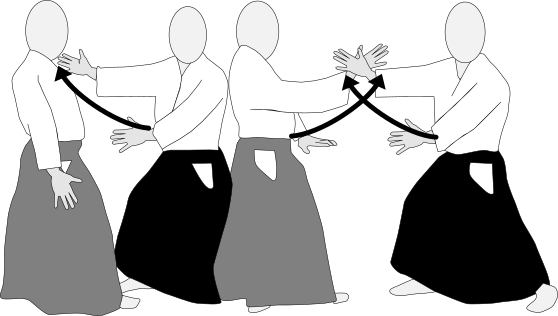
Seen from above. Grey dashed outlines are the starting position, solid feet the end position, blue is the new position of the foot. Blue dashed outline: the foot stays in place and only turns.
Hanmi半身 omote sankaku: triangular stance, body at an angleHitoemi一重身 ura sankaku: fully sideways, body in one lineIrimi入身 the back foot steps forward past the line of attackTenkan転換 a 180° turn around the front foot; the back foot draws an arc clockwiseKaiten回転 turning on the spot on the balls of the feet; the feet stay put
Triangle, square, circle
In stages 5 and 6 the sabaki and awase exercises take the shapes sankaku, shikaku and maru. The founder of aikido, Morihei Ueshiba, also used these three shapes as an image of the whole art.
Sankaku三角 triangle Ukenagashi nenten hō: deflecting and twisting. Entry, sharp angle, hanmi.Shikaku四角 square Uchikaiten renzoku sabaki: continuous turning, a firm frame and stability.Maru丸 circle Sōgō sabaki: ki, hands, feet and body work together; the movement never breaks.
Dojo spirit
Dōjō no kokoroe 道場の心得
The dojo principles stand in the core of chart B, right next to the four great techniques. Ikeda sums them up in two words: kibishiku, tanoshiku – strictly and with joy. Strictness without joy dries training out; joy without strictness lets it spill away.
Mittsu no kokoro 三つの心 – three hearts
直き心Naoki kokoro a direct, sincere heart
明るき心Akaruki kokoro a bright, joyful heart
清き心Kiyoki kokoro a pure heart
These three values come from the old Japanese Shinto tradition.
Breath and misogi
The breathing exercises of chart B (kokyū hō in seiza, daien kokyū hō, funakogi undō, furitama) come from the misogi purification practices of O-sensei. They are not an extra warm-up: they teach breathing with the whole body and joining movement with breath, which is the heart of the breath throws, kokyū nage.
Weapons
From stage 4, bokken and jō are added: etiquette, suburi, five stances, deflection (uke nagashi). In stage 7 the sword is drawn according to the principles of the four great techniques (aiki battō hō). Here too it shows that the hand movements of aikido are movements of the sword.
Glossary
aiki 合気
unifying ki; blending with the partner's movement and intention
awase 合わせ
blending, adapting to the partner
ayumi ashi 歩み足
walking, the feet alternate
bokken 木剣
wooden sword
chūdan · jōdan · gedan 中段・上段・下段
middle, upper, lower level
genri 原理
fundamental principle
hakobi ashi 運び足
moving the feet without crossing them
hanmi 半身
“half body” stance, at an angle to the partner
hantachi 半立ち
tori kneels, uke stands
hitoemi 一重身
stance fully sideways, the body in one line
irimi 入身
entering past the attack to the partner or behind them
jō 杖
wooden staff
kaiten 回転
turning on the spot
kamae 構え
stance, readiness
keiko 稽古
training; literally “reflecting on the old”
ki 気
life energy, intention, attention
kokyū 呼吸
breath; also the breath power of the whole body
kuzushi 崩し
unbalancing
nage 投げ
throw; in some schools also the one who throws
omote · ura 表・裏
front (in front of the partner) · back (behind the partner, with a turn)
osae 抑え
pressing down, pinning
ri 理
law, principle
sabaki 捌き
handling the movement: hands, feet, body, ki
shikkō 膝行
walking on the knees
tenkan 転換
turn around the front foot
tori 取り
the one who performs the technique
uke 受け
the one who attacks and receives the technique
ukemi 受け身
the art of falling
zan 斬
sword cut
zanshin 残心
awareness that lasts beyond the technique
Nothing found.
We measure site traffic with Google Analytics. We only use cookies if you agree.Privacy policy